English
Introduction to Ceramic Honeycomb Catalysts
2024-03-01

2024-03-01
In the world of industrial emission control and chemical processing, few innovations balance geometric surface area with fluid dynamics as elegantly as the ceramic honeycomb catalyst. If you've ever wondered how a diesel truck's exhaust becomes less toxic or how a chemical plant reduces volatile organic compounds (VOCs), you've likely encountered this technology. This guide provides a technical yet accessible introduction to ceramic honeycomb catalysts, covering what they are, how they are made, and the critical material properties that make them indispensable.
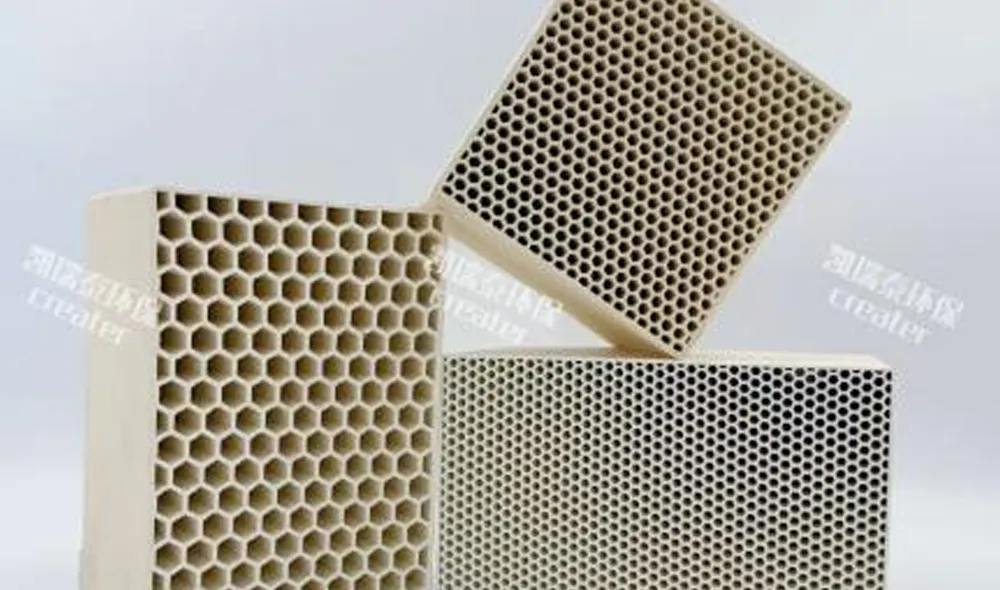
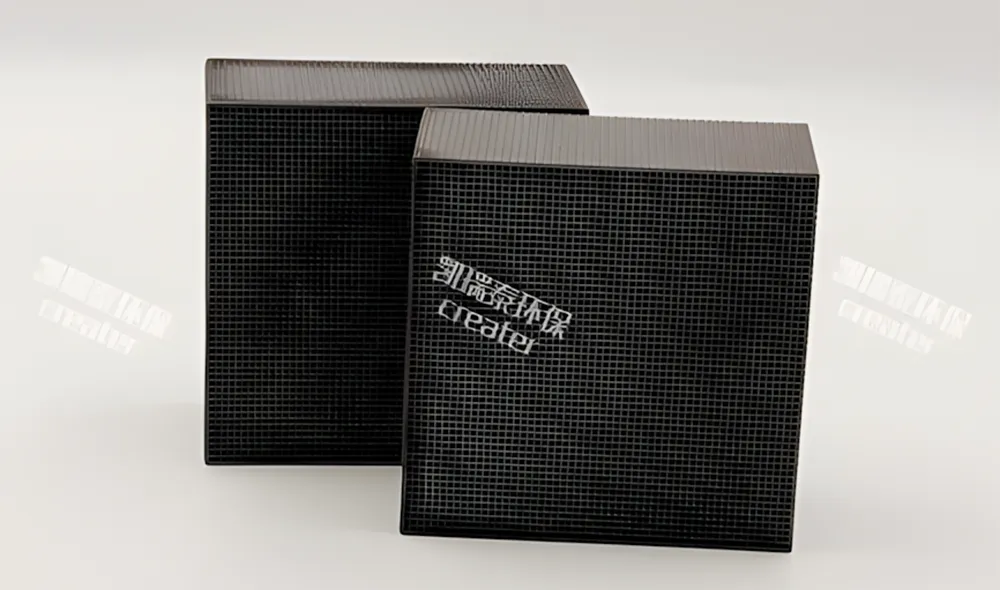
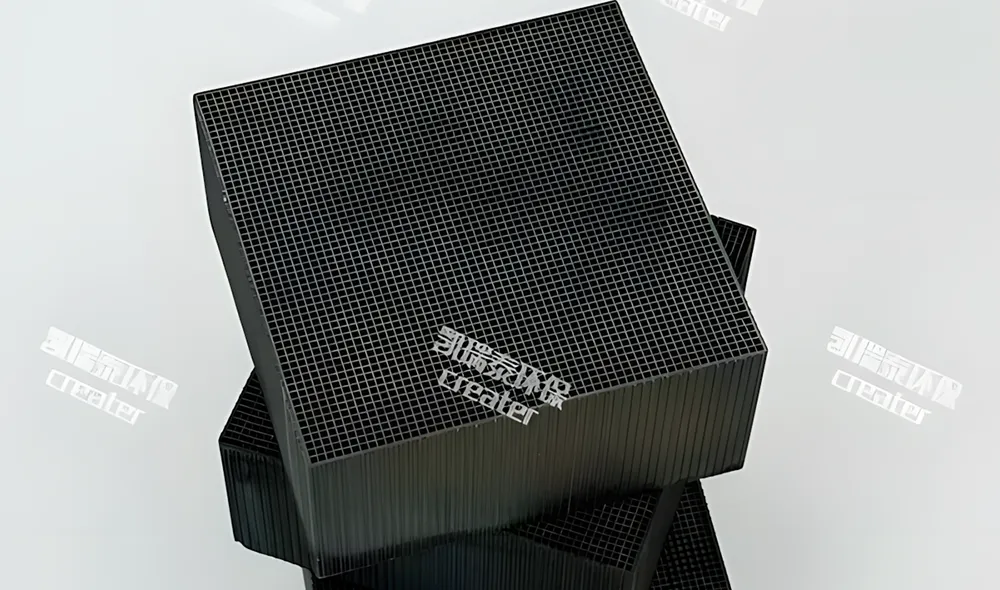
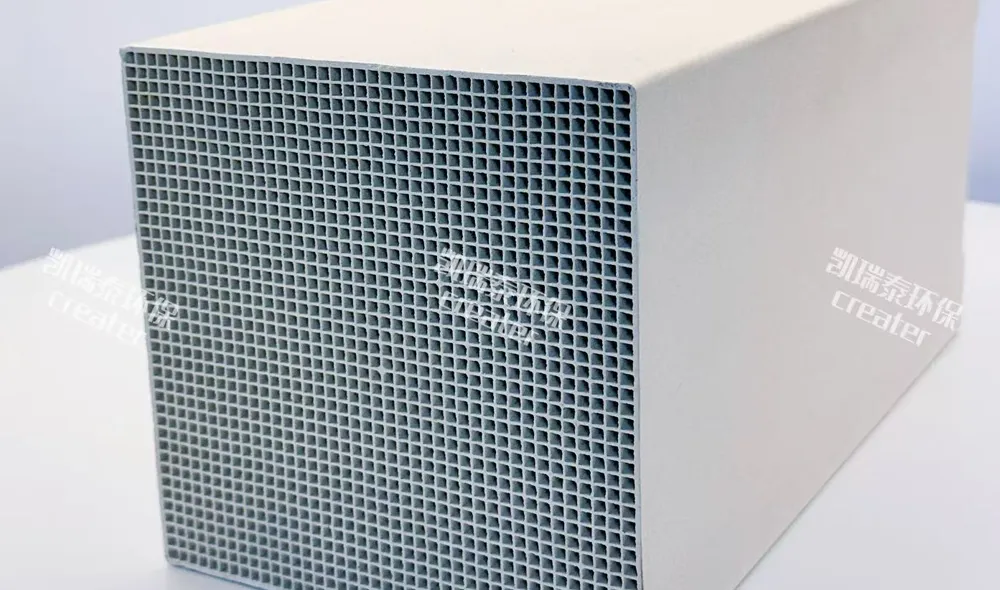
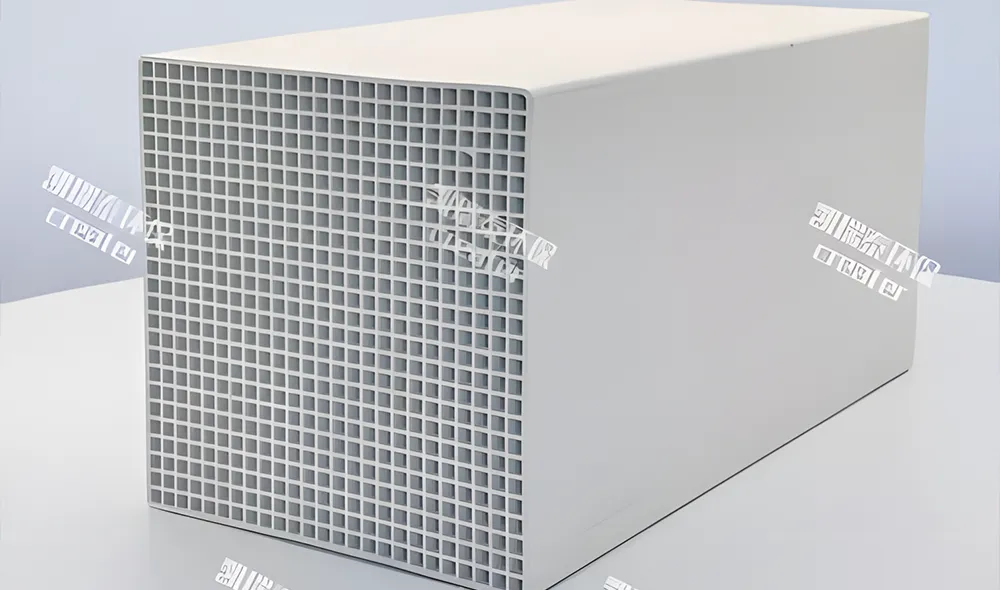
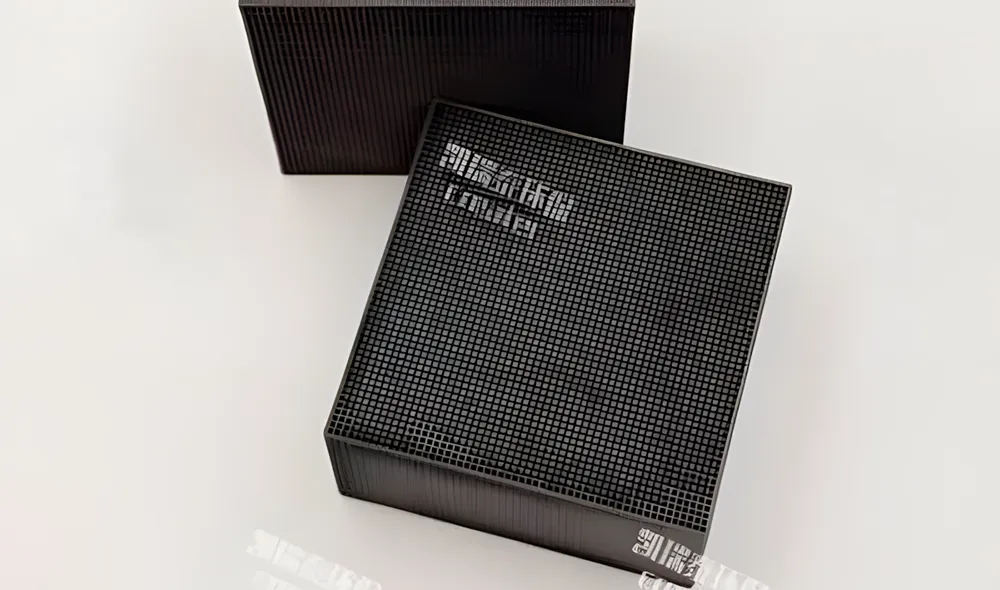
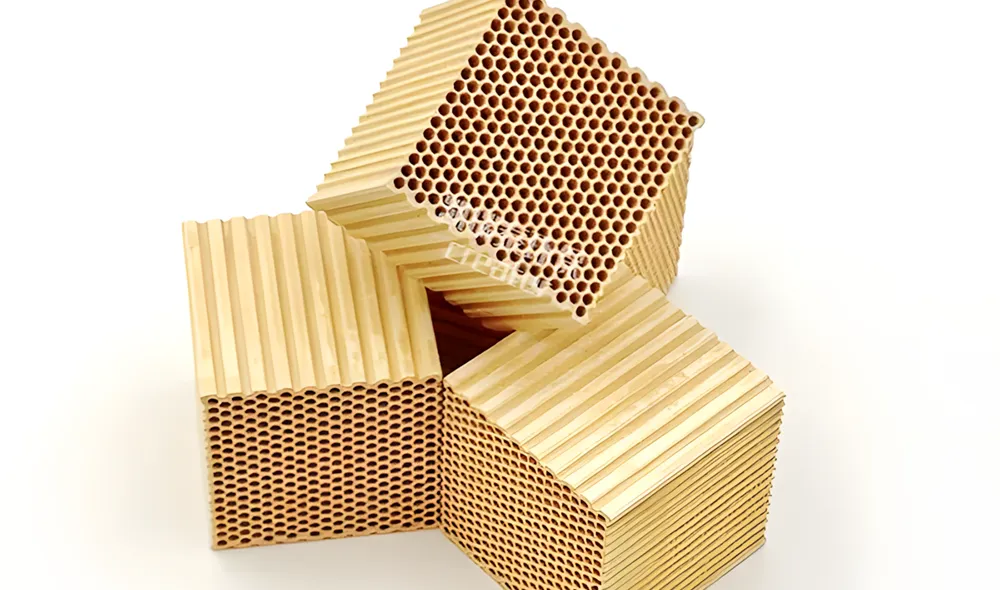
A ceramic honeycomb catalyst is a monolithic (single-block) structure composed of thousands of parallel, thin-walled channels—resembling a beehive or engine core—made from refractory ceramic materials and coated with catalytically active components (typically precious metals like platinum, palladium, or rhodium, or base metal oxides). Unlike packed-bed catalysts (random pellets), the honeycomb design serves two primary purposes:
Low Backpressure: The straight, open channels allow exhaust or process gases to flow through with minimal resistance, saving energy in downstream systems (e.g., engines or fans).
High Geometric Surface Area: A standard 400 cells per square inch (cpsi) monolith offers roughly 3,000 m² of internal channel surface per cubic meter of monolith, maximizing contact between gas molecules and the catalytic coating.
Common applications include:
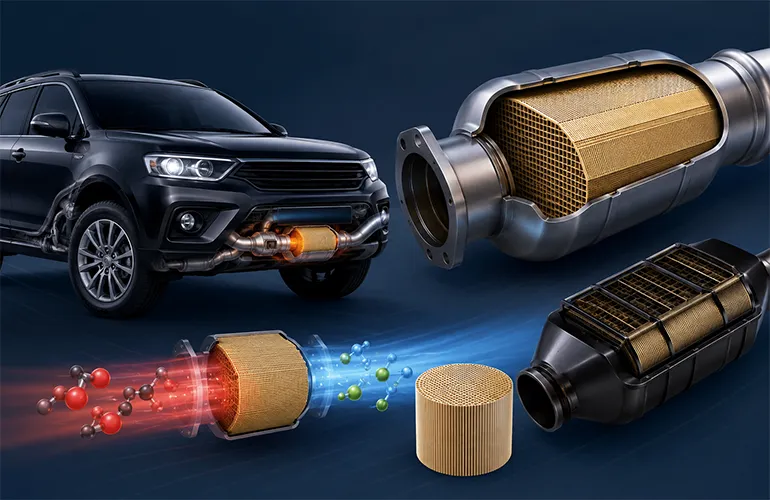
Automotive catalytic converters (three-way catalysts for gasoline; SCR or DOC for diesel)
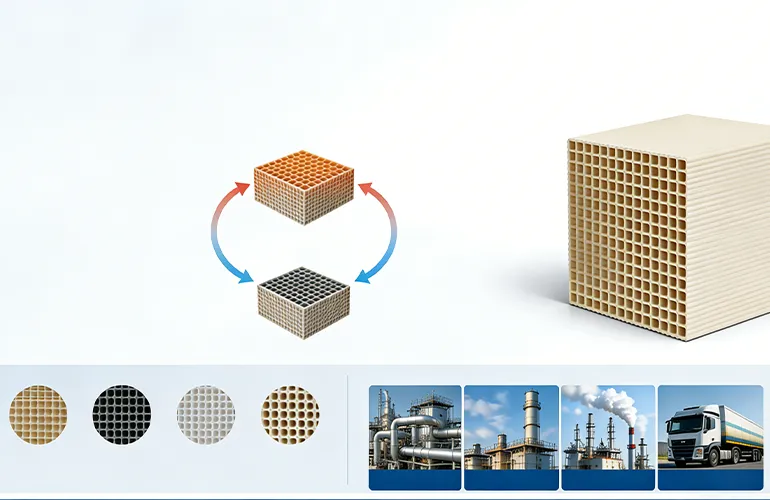
Stationary industrial emission control (VOC oxidizers, NOx reduction in power plants)
Chemical synthesis (e.g., hydrogen cyanide or maleic anhydride production)
The production of ceramic honeycomb catalysts requires precision extrusion and specialized coating techniques. The process splits into three main stages: substrate forming, drying/firing, and washcoating.
The raw materials (typically cordierite – 2MgO·2Al₂O₃·5SiO₂ – or aluminum titanate) are mixed with organic binders, plasticizers, and water to form a plasticized batch. This clay-like mixture is forced through a honeycomb die—a complex tool that creates the parallel channels.
Cell density: 100 to 1,200 cpsi (higher density = more surface area, but higher backpressure)
Wall thickness: 2 to 12 mils (0.05–0.3 mm)
After extrusion, the "wet" monolith is cut to length.
The green body is dried using microwave or dielectric dryers to remove water uniformly—crucial to avoid cracking. Then it enters a tunnel kiln at >1,350°C (for cordierite). During firing:
Organic binders burn off (outgassing).
Raw minerals react and sinter into a microcrystalline ceramic.
The monolith shrinks predictably (~15–20% linear).
The inert ceramic substrate has low intrinsic activity. Manufacturers apply a high-surface-area washcoat (usually gamma-alumina, γ-Al₂O₃ stabilized with lanthanum) that carries the noble metals. Process:
Dip the clean monolith into a slurry of alumina powder, water, and acidic stabilizers.
Blow excess slurry from the channels with compressed air (ensuring no plugging).
Dry and calcine at ~500°C to fix the washcoat.
Impregnate with noble metal solutions (e.g., H₂PtCl₆) followed by reduction to metallic nanoparticles.
The final product is a ready-to-can catalyst monolith.
For a ceramic honeycomb catalyst to survive industrial or automotive conditions, four interrelated properties are non-negotiable.
| Property | Why It Matters | Typical Value (Cordierite) |
| Low Coefficient of Thermal Expansion (CTE) | prevents cracking during rapid heating/cooling (e.g., engine cold start) | 0.5–1.7 × 10⁻⁶ /°C (25–800°C) |
| High Thermal Shock Resistance | ability to withstand ΔT of 800°C without failure | >700°C (quench test) |
| Porosity & Pore Distribution | anchors washcoat and improves gas diffusion into the ceramic wall | 30–40% volume porosity; pores 1–10 μm |
| Compressive Strength (A-axis) | withstands canning pressure and vibration in a metal housing | >4 MPa (axial crush strength) |
| Low Backpressure (Hydraulic Diameter) | directly relates to cell geometry – thin walls + larger O.D. reduce ΔP | pressure drop coef. <10 kPa/m at 100,000 1/h space velocity |
Most commercial honeycombs use synthetic cordierite because it uniquely combines:
Low CTE (magnesium-rich cordierite crystals have anisotropic thermal expansion that cancels macroscopically)
Affordable manufacturing (raw materials: talc, kaolin, alumina)
Good chemical resistance to common exhaust poisons (sulfur, chlorine) up to 900°C
A ceramic honeycomb substrate is the inert monolith (often cordierite) that provides structure, low backpressure, and thermal-shock resistance. A ceramic honeycomb catalyst is the substrate plus a high-surface-area washcoat (e.g., γ‑Al₂O₃) and active components such as Pt/Pd/Rh or metal oxides that actually drive VOC/CO/NOx reactions. Reference: https://www.britannica.com/technology/catalytic-converter
Higher CPSI and thinner walls increase geometric surface area and can improve conversion and light-off, but they also raise pressure drop and sensitivity to dust plugging. Lower CPSI with thicker walls reduces ΔP and improves fouling tolerance, but offers less surface area per volume. Selection should consider flow rate, particulate load, target efficiency, allowable backpressure, and housing size constraints. Reference: https://www.iza-structure.org/
The effective window depends on VOC/CO concentration, oxygen level, space velocity, humidity, and poisons (S/Cl/P). Too cold leads to slow activation and low conversion; too hot accelerates noble-metal sintering and washcoat aging, reducing long-term activity. Engineers typically evaluate both the light-off temperature and the stable operating range to balance efficiency and durability. Reference: https://chem.libretexts.org/
Common deactivation includes poisoning (S/Cl/P/Si blocking active sites), thermal aging/sintering (particle growth and surface-area loss), and fouling/coking (dust or heavy organics masking channels and pores). Some issues can be partially mitigated by controlled thermal treatment or cleaning, but certain poisons are effectively irreversible. Upstream filtration and stable operating conditions usually deliver the biggest lifetime gains. Reference: https://chem.libretexts.org/
VOC oxidation catalysts mainly convert VOCs/CO to CO₂ + H₂O, commonly using Pt/Pd. SCR honeycombs reduce NOx to N₂ + H₂O using NH₃/urea, often with V₂O₅–WO₃/TiO₂ or Cu/Fe-zeolite formulations. They differ in required reductant, optimal temperature window, and resistance requirements to sulfur, water, and transient conditions. Reference: https://www.epa.gov/no2-pollution